American Song Project: American Pie
The concept of ‘sound’ is a familiar one. As humans, however, we have the ability to differentiate between sound, or noise, and music. Why do we distinguish the two? What is it about certain sounds that make us say “that is a song”? A song, according to the Webster’s Dictionary, is “a short musical composition of words and music”. Words we understand to be the spoken and written language, but what is music? Music can be explained as simply as sound that is agreeable to the ear. However, it is also a complicated concept of pitches, tones, and harmonies. Throughout the millennia that Man has been playing music, we have pinpointed certain tones and pitches that we deem to be “true”. In other words, there is a whole spectrum of sound waves, like light waves, and in Eurocentric music, 12 of those sound waves have been identified as “in pitch”. The reason they were chosen has to do with the fact that they are harmonious, they are agreeable to the human ear. Over the centuries, different types of music have been formed by the different cultures around the world. These types are called genres, such as folk, rock, classical and jazz. One of the folk-rock songs that Americans have become familiar with is American Pie by Don McLean, which he first recorded in 1971. Its catchy tune and words captured the feeling of the nation in the 1950’s and especially the 60’s.
Don McLean structured American Pie like many rock songs with a set tune for the verses, each separated by the refrain. There are many interpretations of McLean’s lyrics, though none by him. All that he has said about the song is that it started when he was thinking about Buddy Holly’s death and that it is a combination of how he perceived America and what he imagined it would become. He also said that he was attempting to mix his political views with a musical composition. Many people have described as an abstract autobiography of his life from the mid 50’s to the end of the 60’s. The general message explains the change in America from the happy 50’s to the dark 60’s with the death of J.F. Kennedy and the Vietnam War. The first verse would suggest that he it all started with the death of three iconic singers: Buddy Holly, Richie Valens and The Big Bopper.
Here is a break down of the song’s lyrics and some of the possible translations:
American Pie by Don McLean
Verse 1
A long, long time ago
By the time American Pie was published in 1971, is had been over a decade since the incidences that he is referring to. In that time, many other changes had happened that made that time seem far away.
I can still remember how that music used to make me smile
McLean is referring to the upbeat and happy rock and roll music of the 50’s.
And I knew if I had my chance
That I could make those people dance
The general purpose of music in the 50’s was for dancing.
And maybe they'd be happy for a while
McLean wanted to make people happy.
But February made me shiver
On February 3rd, 1959, Buddy Holly, Richie Valens and The Big Bopper died in a plane crash in Iowa. McLean was especially devastated because Holly was his hero.
With every paper I'd deliver
At the time, McLean was a paper boy.
Bad news on the doorstep
The plane crash was in the headlines.
I couldn't take one more step
I can't remember if I cried
When I read about his widowed bride
When Buddy Holly died, his wife was pregnant and shortly after, she had a miscarriage.
But something touched me deep inside
T he day the music died
McLean is referring to February 3rd, 1959 as the day the music died.
Refrain
So, bye-bye, Miss American Pie
There are many ideas about why McLean said “Miss American Pie.” He could have been describing the death of Marilyn Monroe (Miss American Pie). American Pie can also refer to the American Dream, especially since America was falling into a darker time.
Drove my Chevy to the levee
At the time, Chevy was the American car, and thus represents America. The Levee was a bar that McLean and his friends used to go to in his hometown in New York.
But the levee was dry
This could refer to when the Levee shut down, or it could be referencing the way that America and its music were ‘drying up’.
And them good old boys were drinkin' whiskey and rye
This could possibly be a play on words, because there was a city in New York called Rye not far from where McLean grew up, and after the Levee shut down, he and his friends might have driven there for a drink.
Singin' “this'll be the day that I die
This'll be the day that I die”
The quoted song lyrics come from one of Buddy Holly’s hits called “That’ll Be the Day” whose chorus includes the line “That’ll be the day that I die.”
Verse 2
Did you write the Book of Love?
“The Book of Love” was a hit in 1958 by the Monotones.
And do you have faith in God above
If the Bible tells you so?
In 1955, Don Cornell wrote a hit called “The Bible Tells Me So,” and it is also a line in a children’s hymn called “Jesus Loves Me”.
Do you believe in rock n' roll?
This line is most likely referencing the 1965 hit “Do You Believe In Magic?” by Lovin’ Spoonful with lines like “I'll tell you about the magic, and it'll free your soul, but it's like trying to tell a stranger 'bout rock and roll.”
Can music save your mortal soul
Given the lines above, McLean is questioning if music can actually save you.
And can you teach me how to dance real slow
Slow dancing was prominent in the 50’s and suggested a commitment between the partners, but that began to decline in the 60’s as psychedelic guitar solos took over.
Well, I know that you're in love with him
'Cause I saw you dancin' in the gym
Again, dancing with someone meant more than it does today.You both kicked off your shoes
This line is referencing a sock hop.
Man, I dig those rhythm & blues
These events probably began to weight on McLean, and the rhythm and blues would have expressed that feeling.
I was a lonely, teenage broncin' buck
With a pink carnation and a pickup truck
The pickup truck was a symbol of sexual freedom, but McLean is also referencing Marty Robbins 1957 hit “A White Port Coat (And A Pink Carnation).”
But I knew I was out of luck
The day the music diedI started singin'
Refrain
Verse 3
Now for ten years we've been on our own
McLean probably started writing American Pie in 1969, 10 years after Buddy Holly died.
And moss grows fat on a rollin' stone
In this line, McLean reverses the adage “a rolling stone gathers no moss,” showing that things were becoming stale. Also, Bob Dylan’s first major hit was called “Like a Rolling Stone” in 1965.
But that's not how it used to be
McLean preferred Bob Dylan’s folk songs to his folk-rock songs following “Like a Rolling Stone.”
When the Jester sang for the King and Queen
In this line, the Jester is most likely Bob Dylan. The King and Queen however can be disputed. They could possibly refer to Peter Seger and Joan Baez, who were two of the biggest names in folk music at the time and who Dylan collaborated with on the song “Blowin’ In the Wind.” However, Elvis Presley is much more often referred to as the King. Also, Dylan once sang for the queen of England, and was not properly dressed, thus, a jester.
In a coat he borrowed from James Dean
In the movie “Rebel Without A Cause,” James Dean wears a red coat that Bob Dylan then makes a point of wearing on the cover of his album “The Freewheelin’ Bob Dylan.” Also, the cover shot resembles a famous picture of James Dean.
In a voice that came from you and me
This could be referencing the folk style of music that Bob Dylan sang.
Oh, and while the King was looking down
The Jester stole his thorny crown
If “King” in the line above represents Elvis, then he this could be talking about how Dylan became more popular as Elvis began to decline, and how he took over the price of fame, the thorny crown, which is also a direct reference to Jesus Christ on the cross.
The courtroom was adjourned
No verdict was returned
These last two lines talk about the Kennedy assassination, and how there was never any official verdict.
And while Lennon read a book on Marx
This line is also a play on words. John Lennon did read about Karl Marx and believed his philosophy, but so did Lenin, the soviet dictator.
The quartet practiced in the park
The quartet is The Beatles, but the park could refer to England, when they were still ‘practicing’, or it could be Candlestick Park, where they held their last concert.
And we sang dirges in the dark
Since a dirge is a funeral song, McLean is probably talking about Kennedy’s death, and also Martin Luther King Jr.
The day the music died We were singin'
Refrain
Verse 4
Helter Skelter in a summer swelter
“Helter Skelter” is a Beatles song that was the inspiration for several murders by a man named Charles Mason in the summer.
The Byrd’s flew off with a fallout shelter
The Byrd’s were a folk-rock group. One of its members was arrested for possession of marijuana and admitted to a rehab program, for which another name is a fallout shelter.
Eight miles high and falling fast
“Eight Miles High” was a psychedelic song by The Byrd.
It landed foul on the grass
Foul grass is again referring to the marijuana.
The players tried for a forward pass
This football metaphor could be talking about anyone who was trying to get to a goal.
With the Jester on the sidelines in a cast
Bob Dylan is the Jester again, and this time McLean is talking about the time that Dylan crashed his motorcycle and afterwards did not leave his house for nine months, hence the ‘cast’.
Now the half-time air was sweet perfume
The sweet perfumes here are the drugs in the half-time, or mid-60’s.
While the Sergeants played a marching tune
The Beatles’ album “Sergeant Pepper's Lonely Hearts Club Band” was released in 1967 and it changed rock ‘n roll forever. It was the first to have printed lyrics on the back, and the first to use synthetic sounds, and it did not have a hit single.
We all got up to dance
Oh but we never got the chance
By the late 60’s the Beatles had transformed rock ‘n roll from dance music to music that was just meant to be listened to.
'Cause the players tried to take the field
In 1968 at the Chicago Democratic Convention, some protestors of the Vietnam War rioted and were beaten down by the police. There were also many other incidence and riots that this could refer to.
The marching band refused to yield
The marching band most likely refers to The Beatles and their anti-war songs.
Do you recall what was revealed
The day the music died
We started singing
Refrain
Verse 5
Oh, and there we were, all in one place
The “place” was the Woodstock Performing Arts Festival in 1969. About 400,000 people were present.
A generation lost in space
This line refers to several things. First, the first landing on the moon was in 1969. Also, there was a TV show called “Lost in Space,” and the phrase “lost in space” refers to people who are high on drugs.
With no time left to start again
McLean thought that his generation was wasting its time on drugs.
So come on, Jack, be nimble, Jack be quick
Jack Flash sat on a candlestick
This is a reference to The Rolling Stone’s hit “Jumpin’ Jack Flash,” and also shows Jack’s failure to “jump over” the candlestick.
'Cause fire is the devils only friend
The Rolling Stones responded to “Sgt. Pepper” with the album “Their Satanic Majesties Request,” which turned out to not hold up to the Beatles at all. They also wrote a song called “Sympathy for the Devil.”
Oh, and as I watched him on the stage
In December of 1969, an attempted to put on another Woodstock at Altamont Speedway was made and The Rolling Stones participated.
My hands were clenched in fists of rage
No angel born in Hell
The “angels born in Hell” were the Hell’s Angels who were appointed to be the security at the Altamont Speedway. However, after downing their payment of beer and LSD, they proceeded to beat a black man to death and other members of the congregation.
Could break that Satan's spell
And as flames climbed high into the night
The Rolling Stones left the scene at Altamont Speedway in a helicopter, hence the “climbing high into the night.” According to McLean, they started the “hell,” and then left in the middle of the destruction.
To light the sacrificial rite
The sacrifice could possibly be the man’s life who was killed.
I saw Satan laughing with delight
At this point, McLean believes that Satan is winning, because the youth are no longer just fighting the police and authorities, but also among themselves.
The day the music died
He was singing
Refrain
Verse 6
I met a girl who sang the blues
The girl is Janis Joplin.
And I asked her for some happy news
McLean is still looking for the peace and happiness of the 50’s.
But she just smiled and turned away
Janis Joplin died of an accidental heroin overdose in 1970.
I went down to the sacred store
The “sacred store” is the record store that sold 50’s albums.
Where I'd heard the music years before
But the man there said the music wouldn't play
By the 70’s, the 50’s music was no longer played and no one paid any attention to it.
And in the streets the children screamed
The youth were being beaten in the streets by the police, especially near the end of the decade.
The lovers cried, and the poets dreamed
This is a reference to psychedelic age.
But not a word was spoken
The church bells all were broken
Because McLean is a religious man, this line probably speaks about his belief that people had turned away from God.
And the three men I admire most
Although in the next line McLean states the “three men”, he has also referred the three singers who died in the plane crash so often that could also be referring to them.
The Father, Son and the Holy Ghost
They caught the last train for the coast
In either case about the “three men,” they were both gone for McLean. God was dying and so was rock ‘n roll as McLean loved it.
The day the music died
And they were singin'
Refrain X2
Don McLean first recorded American Pie in 1971 as a vinyl record. Since then, there have been many versions and recordings of the song. It was incorporated into the movie The Next Best Thing, and Madonna sang a pop version of it in the soundtrack. She later changed it into a dance-pop song and made her own music video, which was released in February of 2000. There have also been many parodies made of the song, including “American Pie Guy” on That’s 70’s Show, “Parable Guy” by the band ApologetiX in 1998 and possibly most well known, “The Saga Begins” by Weird Al Yankovic, as song about Star Wars.
American Pie by Don McLean certainly gives us a lot of information about events in the 1950’s and 60’s, especially what songs were popular at the time. The general message was one of a country sliding down a slope and losing its grip on what was once good and pure. The new generation was being thrust into a horrific war, but they were essentially powerless to stop it and resorted to distorting their reality with drugs. Not only was the original rock ‘n roll leaving, or being forgotten, but so, in McLean’s eyes, was God.
Showing posts with label project. Show all posts
Showing posts with label project. Show all posts
Wednesday, February 6, 2008

Wednesday, January 30, 2008
Presidential Project
Cori Hume
Amelia Vance
Candidate Profile
Candidate: Bill Richardson
Political Party: Democrat
What other political offices has this person had in his career?
Bill Richardson had been a Congressman for fourteen years, United States Ambassador to the United Nations, Secretary of Department of Energy, and on his second term of being the Governor of New Mexico.
What prior political and leadership experiences does this candidate have that makes him qualified to be the next president?
While Bill Richardson was in Congress, he sat on the Interior Committee and the House Select Committee of Intelligence. While he was on the Interior Committee he fought for Native Americans to protect their land and improve the quality of their lives. He has met with Saddam to convince him that the two American contractors who got lost and accidentally crossed the Iraq border should be freed back to America. While being the United States Ambassador to the United Nations he helped Zaire (now the Democratic Republic of Congo) transition to democracy, he released hostages in Sudan, and negotiated a fragile cease-fire in Darfur.
He has been nominated five times for the Nobel Peace Prize, mainly for his attempt to create international peace. Being the Secretary of Department of Energy, he has been fighting global warming for years already. By 2010, he demanded that 7.5% of U.S. energy was renewable energy. He also got the government to begin to pay for medical expenses for nuclear workers who were sick and dying.
While he has been Governor of New Mexico, he has created 80,000 more jobs, the unemployment has been higher than it has in the past 30 years, and the income and teachers pay has also increased. He made a law where every child under the age of five receives health insurance. He used taxes for jobs and renewable energy, raised the minimum wage, and made a law that state utilities need to use four times the renewable energy then they were before.
Issues:
A) The Iraq War: Bill Richardson favors an elongated exist strategy for getting the US soldiers out of Iraq. However, he assures that he would have a deadline set some time in this calendar year that would be determined by the military officials. His rationale is that if any troops are left in Iraq, no matter what the purpose is, they will remain targets as well as provide the opportunity for continued violence. At the same time, he would have a peace convention held with the Shia, the Sunni and the Kurds, as well as a Persian Gulf Middle East peace conference. However, he also believes that some troops should be deployed to Afghanistan and some in other locations in the Middle East, because, in his opinion, “the terrorism is gaining strength.”
B) National Security: Bill Richardson’s views on national security cover a wide range of issues. He believes that human rights can be more important than national security, and he supports the Geneva Conventions. He feels that ignoring the Nuclear Test Ban will create distrust, but that there should still be a focus on international terrorism and materials that can be used for nuclear weapons. Richardson also regards America’s dependency on foreign oil as a liability to the country’s national security. He states that America needs to reduce that dependency from 65% to 20% by 2015.
C) Education: Bill Richardson has great goals for American education. His plan includes $60 billion towards making American education the best in the world, new math and science academies with 100,000 new teachers, a minimum wage for teachers of $40,000 per year, expanding the lottery scholarship program for college students, and supply every 7th grader with a laptop. The education of future Americans is so important to him that he believes that children should start in preschool under the age of 4 and that the both school days and the school year should be extended. He sees charter schools as holding a lot of promise, but if a school is failing, he believes that they should be helped to stop them from collapsing.
D) Healthcare: First and foremost, Bill Richards sees a need for a universal healthcare system, within one year. His goals are to form preventative healthcare without raising taxes, to find cures for HIV/AIDS, make sure that proscription drugs are lower for seniors, raise rates of child immunizations, and overall make healthcare affordable and accessible to everyone.
E) The Economy: On the issue of the economy, Bill Richardson believes that the next president must cut back enormously on spending, especially through elimination of corporate welfare, and to restore our financial strength by decreasing our budget surpluses He also believes that for the economy to be more successful, we must invest in three major areas: the future rather than spending everything now in the present, science and technology and an educated workforce. With science and technology, he wants to create 250 Math, Science, and Innovation Academies.
He also believes in order to maintain a healthy economy we need a highly skilled and well-paid workforce. He wants to keep promises to the Middle Class workers and work towards the future, rather than living day-by-day.
.
F) Taxes: Bill Richardson does not just say he will make tax cuts. He has a history in New Mexico for doing it. His tax cuts would focus on the middle class and says he would reduce income tax as well as create a Taxpayer Bill of Rights. He wants to cut capital gains tax and income tax from 8.2%- 4.9%. He believes the tax structure for the wealthiest 2% is unfair and wants t end it. While being Governor of New Mexico, he returned $1 billion dollars from taxes back to families.
G) Global Warming: Bill Richardson has already had several years of experience in trying to prevent the effects of global warming. He has been the Secretary of Department of Energy. He wants to cut oil demand by 50% by 2020, by reducing oil imports. He wants to put the 100 mpg car into the market place, but must force work to get to 50 mpg by 2020. He also wants to reduce carbon impact from liquid fuels by 30% by 2020. He wants to improve the energy productivity 20% by 2020, He wants to reduce greenhouse gas emissions 90% by 2050. He wants oil companies to become energy companies, and he strongly encourages people to begin driving electric and plug-in cars and the use of transportation. He promotes solar wind, and biomass energy.
H) Nuclear Weapons: He wants to make significant cuts to our nuclear forces, which will encourage other nations to fight against nuclear productivity. He wants to reduce the number of nuclear weapons, and secure nuclear weapons from theft. He wants to free humanity from the threat of nuclear destruction and create a renewed U.S. commitment to the Nuclear Non-Proliferation Treaty. He believes these are the steps necessary to establish global nuclear weapon safety:
1. Halt nuclear weapons proliferation
2. Halt nuclear weapons production and reduce the size of nuclear arsenals
3. Halt or secure civilian programs that require or produce bomb-grade materials
4. Consolidate and secure all existing fissile materials and all future production associated with nuclear energy and research worldwide
Summary of biography:
Bill Richardson was born on November 15th 1947, having William Richardson as his father, and Maria Luisa Lopez-Collada as his mother. He was originally born in Pasadena, but soon moved to New Mexico due to his father’s job as a banker. He grew up immersed in both American and Mexican culture, celebrating and being proud of both. In 1961, he left his family and moved to Massachusetts for high school where he was on the Varsity Baseball Team and met his future wife, Barbara Flavin. In 1966, he continued his education at Tufts University in Boston. The turning point in his life where he became interested in politics was during a school trip to Washington DC and was inspired by the words of Senator Hubert Humphrey. While growing up, he soon learned that he needed to give back to his community.
He lived with his wife in D.C. for a few years, learning more about politics, and then moved back to New Mexico. He became a staffer for a local Democratic Party, and began to teach Government at Santa Fe Community College. Bill Richardson first campaigned in 1980 against Manual Lujan for New Mexico’s 1st Congressional District. As he lost the first time, he won two years later.
While he was Congressman Richardson, he was on the Energy and Commerce Committee, in which he proposed an amendment to the Clean Air Act in order to have cleaner gas to fight pollution and global warming. He also fought to protect 1,000 acres of New Mexico wilderness and contributed to the Oil Pollution Prevention Act.
He also continued to fight for the rights of Native Americans, and from 1993-1994 he introduced 56 bills, 17 of which became laws. Richardson became more involved in diplomacy and traveled to North Korea and the Middle East. He became the United States Ambassador to the United Nations. While being Ambassador he took multiple trips to Africa which changed his life when he saw the diseases, poverty, and suffering first hand. It made him want to help the conflicts going on in Africa, such as cease-fire in Darfur, and he ended up with five nominees for the Nobel Peace Price.
In 1998, Richardson stopped being the Ambassador, and became the Secretary of Department of Energy, where he started to fight global warming and tried to stop the productivity of nuclear weapons as much as he could. He then decided to give back to the community he grew up in, New Mexico, and ran for governor. He won, and has won again being in his second term now of New Mexico’s Governor. He has helped the people of New Mexico significantly with jobs, health care, minimum wage, schools, and taxes.
Bill Richardson grew up inspired to make a change, and now he has given back to the community by being an inspirational leader for others.
My Point of View
To begin with, I am undecided on my political views. Some of the Liberal concepts make sense to me, but so do some of the Conservative ideas. I am not passionately connected to any of the 2008 presidential candidates. That being said, some of Bill Richardson’s views do make sense to me. For instance, the importance that he places on education, his reasons for viewing it so highly and his investment in the future all seem like helpful points to pursue. On the other hand, as much as getting all the troops out of Iraq seems like a good idea, especially since the current plan is not doing so well, I am not at all convinced that Bill Richardson’s “exist strategy” will work. I think that the Republicans do have a legitimate concern about making sure that there remains some stability in Iraq if we are going to pull all of our troops out.
If Bill Richardson was still running for president, it is possible that I would vote for him. However, I most likely would not, because I think my views tend to lean more towards the Conservative side. Most Democrats seem to me to have high expectations for how they will “fix” the problems and make life better for everyone, but they do not root their theories in reality. Richardson, on the other hand, does for the most part present realistic plans.
Amelia Vance
Candidate Profile
Candidate: Bill Richardson
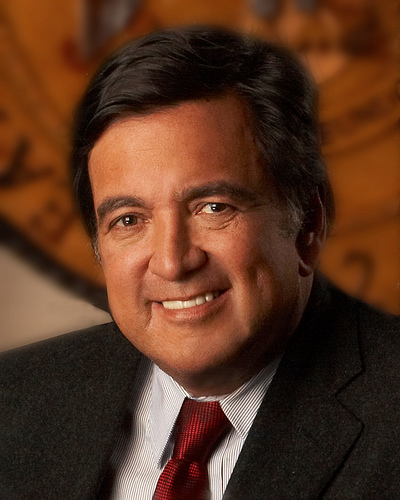
Political Party: Democrat
What other political offices has this person had in his career?
Bill Richardson had been a Congressman for fourteen years, United States Ambassador to the United Nations, Secretary of Department of Energy, and on his second term of being the Governor of New Mexico.
What prior political and leadership experiences does this candidate have that makes him qualified to be the next president?
While Bill Richardson was in Congress, he sat on the Interior Committee and the House Select Committee of Intelligence. While he was on the Interior Committee he fought for Native Americans to protect their land and improve the quality of their lives. He has met with Saddam to convince him that the two American contractors who got lost and accidentally crossed the Iraq border should be freed back to America. While being the United States Ambassador to the United Nations he helped Zaire (now the Democratic Republic of Congo) transition to democracy, he released hostages in Sudan, and negotiated a fragile cease-fire in Darfur.
He has been nominated five times for the Nobel Peace Prize, mainly for his attempt to create international peace. Being the Secretary of Department of Energy, he has been fighting global warming for years already. By 2010, he demanded that 7.5% of U.S. energy was renewable energy. He also got the government to begin to pay for medical expenses for nuclear workers who were sick and dying.
While he has been Governor of New Mexico, he has created 80,000 more jobs, the unemployment has been higher than it has in the past 30 years, and the income and teachers pay has also increased. He made a law where every child under the age of five receives health insurance. He used taxes for jobs and renewable energy, raised the minimum wage, and made a law that state utilities need to use four times the renewable energy then they were before.
Issues:
A) The Iraq War: Bill Richardson favors an elongated exist strategy for getting the US soldiers out of Iraq. However, he assures that he would have a deadline set some time in this calendar year that would be determined by the military officials. His rationale is that if any troops are left in Iraq, no matter what the purpose is, they will remain targets as well as provide the opportunity for continued violence. At the same time, he would have a peace convention held with the Shia, the Sunni and the Kurds, as well as a Persian Gulf Middle East peace conference. However, he also believes that some troops should be deployed to Afghanistan and some in other locations in the Middle East, because, in his opinion, “the terrorism is gaining strength.”
B) National Security: Bill Richardson’s views on national security cover a wide range of issues. He believes that human rights can be more important than national security, and he supports the Geneva Conventions. He feels that ignoring the Nuclear Test Ban will create distrust, but that there should still be a focus on international terrorism and materials that can be used for nuclear weapons. Richardson also regards America’s dependency on foreign oil as a liability to the country’s national security. He states that America needs to reduce that dependency from 65% to 20% by 2015.
C) Education: Bill Richardson has great goals for American education. His plan includes $60 billion towards making American education the best in the world, new math and science academies with 100,000 new teachers, a minimum wage for teachers of $40,000 per year, expanding the lottery scholarship program for college students, and supply every 7th grader with a laptop. The education of future Americans is so important to him that he believes that children should start in preschool under the age of 4 and that the both school days and the school year should be extended. He sees charter schools as holding a lot of promise, but if a school is failing, he believes that they should be helped to stop them from collapsing.
D) Healthcare: First and foremost, Bill Richards sees a need for a universal healthcare system, within one year. His goals are to form preventative healthcare without raising taxes, to find cures for HIV/AIDS, make sure that proscription drugs are lower for seniors, raise rates of child immunizations, and overall make healthcare affordable and accessible to everyone.
E) The Economy: On the issue of the economy, Bill Richardson believes that the next president must cut back enormously on spending, especially through elimination of corporate welfare, and to restore our financial strength by decreasing our budget surpluses He also believes that for the economy to be more successful, we must invest in three major areas: the future rather than spending everything now in the present, science and technology and an educated workforce. With science and technology, he wants to create 250 Math, Science, and Innovation Academies.
He also believes in order to maintain a healthy economy we need a highly skilled and well-paid workforce. He wants to keep promises to the Middle Class workers and work towards the future, rather than living day-by-day.
.
F) Taxes: Bill Richardson does not just say he will make tax cuts. He has a history in New Mexico for doing it. His tax cuts would focus on the middle class and says he would reduce income tax as well as create a Taxpayer Bill of Rights. He wants to cut capital gains tax and income tax from 8.2%- 4.9%. He believes the tax structure for the wealthiest 2% is unfair and wants t end it. While being Governor of New Mexico, he returned $1 billion dollars from taxes back to families.
G) Global Warming: Bill Richardson has already had several years of experience in trying to prevent the effects of global warming. He has been the Secretary of Department of Energy. He wants to cut oil demand by 50% by 2020, by reducing oil imports. He wants to put the 100 mpg car into the market place, but must force work to get to 50 mpg by 2020. He also wants to reduce carbon impact from liquid fuels by 30% by 2020. He wants to improve the energy productivity 20% by 2020, He wants to reduce greenhouse gas emissions 90% by 2050. He wants oil companies to become energy companies, and he strongly encourages people to begin driving electric and plug-in cars and the use of transportation. He promotes solar wind, and biomass energy.
H) Nuclear Weapons: He wants to make significant cuts to our nuclear forces, which will encourage other nations to fight against nuclear productivity. He wants to reduce the number of nuclear weapons, and secure nuclear weapons from theft. He wants to free humanity from the threat of nuclear destruction and create a renewed U.S. commitment to the Nuclear Non-Proliferation Treaty. He believes these are the steps necessary to establish global nuclear weapon safety:
1. Halt nuclear weapons proliferation
2. Halt nuclear weapons production and reduce the size of nuclear arsenals
3. Halt or secure civilian programs that require or produce bomb-grade materials
4. Consolidate and secure all existing fissile materials and all future production associated with nuclear energy and research worldwide
Summary of biography:
Bill Richardson was born on November 15th 1947, having William Richardson as his father, and Maria Luisa Lopez-Collada as his mother. He was originally born in Pasadena, but soon moved to New Mexico due to his father’s job as a banker. He grew up immersed in both American and Mexican culture, celebrating and being proud of both. In 1961, he left his family and moved to Massachusetts for high school where he was on the Varsity Baseball Team and met his future wife, Barbara Flavin. In 1966, he continued his education at Tufts University in Boston. The turning point in his life where he became interested in politics was during a school trip to Washington DC and was inspired by the words of Senator Hubert Humphrey. While growing up, he soon learned that he needed to give back to his community.
He lived with his wife in D.C. for a few years, learning more about politics, and then moved back to New Mexico. He became a staffer for a local Democratic Party, and began to teach Government at Santa Fe Community College. Bill Richardson first campaigned in 1980 against Manual Lujan for New Mexico’s 1st Congressional District. As he lost the first time, he won two years later.
While he was Congressman Richardson, he was on the Energy and Commerce Committee, in which he proposed an amendment to the Clean Air Act in order to have cleaner gas to fight pollution and global warming. He also fought to protect 1,000 acres of New Mexico wilderness and contributed to the Oil Pollution Prevention Act.
He also continued to fight for the rights of Native Americans, and from 1993-1994 he introduced 56 bills, 17 of which became laws. Richardson became more involved in diplomacy and traveled to North Korea and the Middle East. He became the United States Ambassador to the United Nations. While being Ambassador he took multiple trips to Africa which changed his life when he saw the diseases, poverty, and suffering first hand. It made him want to help the conflicts going on in Africa, such as cease-fire in Darfur, and he ended up with five nominees for the Nobel Peace Price.
In 1998, Richardson stopped being the Ambassador, and became the Secretary of Department of Energy, where he started to fight global warming and tried to stop the productivity of nuclear weapons as much as he could. He then decided to give back to the community he grew up in, New Mexico, and ran for governor. He won, and has won again being in his second term now of New Mexico’s Governor. He has helped the people of New Mexico significantly with jobs, health care, minimum wage, schools, and taxes.
Bill Richardson grew up inspired to make a change, and now he has given back to the community by being an inspirational leader for others.
My Point of View
To begin with, I am undecided on my political views. Some of the Liberal concepts make sense to me, but so do some of the Conservative ideas. I am not passionately connected to any of the 2008 presidential candidates. That being said, some of Bill Richardson’s views do make sense to me. For instance, the importance that he places on education, his reasons for viewing it so highly and his investment in the future all seem like helpful points to pursue. On the other hand, as much as getting all the troops out of Iraq seems like a good idea, especially since the current plan is not doing so well, I am not at all convinced that Bill Richardson’s “exist strategy” will work. I think that the Republicans do have a legitimate concern about making sure that there remains some stability in Iraq if we are going to pull all of our troops out.
If Bill Richardson was still running for president, it is possible that I would vote for him. However, I most likely would not, because I think my views tend to lean more towards the Conservative side. Most Democrats seem to me to have high expectations for how they will “fix” the problems and make life better for everyone, but they do not root their theories in reality. Richardson, on the other hand, does for the most part present realistic plans.
Subscribe to:
Posts (Atom)
